You printed a Christmas activity last night. You handed it over this morning. It was done in a minute. Not because the activity was bad. Nobody told you it was a 5-minute activity, so you handed it over expecting twenty.
You’ve felt this gap before: what an activity looks like versus how long it actually holds a kid’s attention. This list sorts it differently: minutes first, theme second.
Most roundups group activities by what they are: crafts here, games there, baking somewhere else. That’s fine if you already know you have an hour free.
It’s useless on the far more common afternoon, when you don’t know yet whether you have 5 minutes or 50. You need to pick something before the window closes.
Sorting by duration answers what you’re actually asking: what can you hand over right now that will last as long as you need it to.
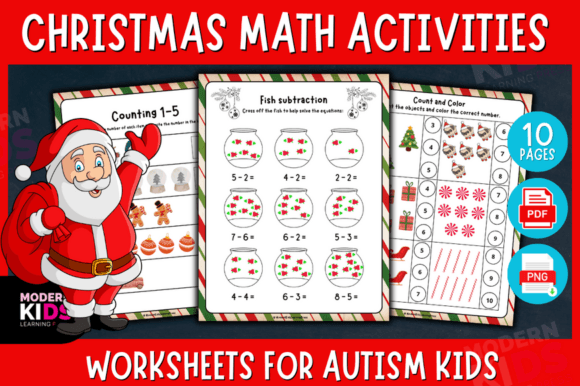
Quick answer: A ready-made Christmas printable bundle covers most duration bands without you drawing or cutting anything yourself, from a 5-minute coloring page to an hour-long group craft.
By the numbers: under 5 minutes is coloring pages and simple tracing. 5 to 10 minutes is paper chains and dot-to-dot sheets. 10 to 15 minutes is word search and cut-and-paste crafts. 15 to 20 minutes is gingerbread coloring books and layered ornaments. 20 minutes to an hour is multi-step crafts and supervised baking. Over an hour is classroom parties and rotating craft stations.
Why Some Christmas Activities Get Abandoned in a Minute
A printed sheet gets abandoned for one of two reasons. Neither is that your kid has a short attention span. Either you expected it to fill more time than it does, or it needed a skill your child hasn’t built yet, so it felt like work instead of play.
Christmas activity lists almost never attach a time to anything. You get a stack of ideas (ornaments, coloring pages, a scavenger hunt) with no sense of which one buys you 5 minutes of quiet and which one buys you an hour.
- No time attached: an activity description tells you what it is, not how long it runs once a real kid is holding it.
- No skill match: a tracing sheet that takes a 3-year-old 15 minutes takes a 7-year-old under a minute.
- No backup plan: when the printed activity ends early, you have nothing lined up for the next band of time. A bundle that already spans several bands fixes this one on its own.
Sorting by duration instead of theme fixes all three at once. You pick based on how much time you actually have, then match the skill level after.
There’s a fourth reason that’s easy to miss: too many choices at once. Handing your child a stack of five activities and letting them pick feels generous.
In practice they sample the first page of each and finish none of them. One activity, handed over on purpose for a specific window of time, beats a pile every time.
A fifth reason matters just as much: you handed it over at the wrong moment, not just in the wrong format. Offer a 20-minute craft five minutes before dinner and it gets abandoned the second you call everyone to the table.
That has nothing to do with the activity itself. Matching the band to the minutes on your clock only works if those minutes are accurate, which is why the next section walks through how each band here was actually timed, not guessed.
Quick Answer: Which Activities Hold Attention the Longest
Here’s the same list from the quick answer box, laid out as a scannable chart before the full breakdown:
- Under 5 minutes: coloring pages, ornament tracing, simple mazes
- 5 to 10 minutes: paper chains, dot-to-dot sheets, simple garlands
- 10 to 15 minutes: word search, cut-and-paste ornaments
- 15 to 20 minutes: gingerbread coloring books, layered paper crafts
- 20 minutes to an hour: multi-step crafts, supervised baking
- Over an hour: classroom parties, rotating craft stations
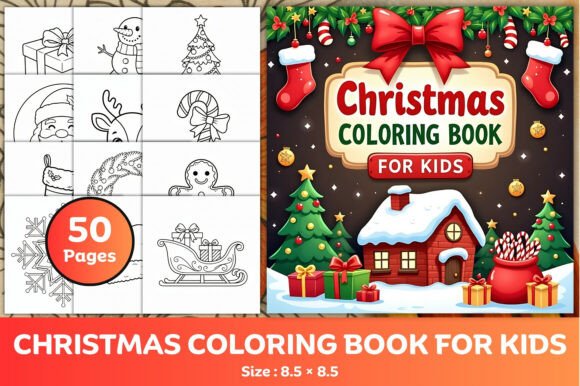
Short on a free afternoon? A single Christmas activity book covers most of these bands from one download, so you’re not hunting for a new sheet every time your window changes.
The breakdown below explains what belongs in each band and why, plus what to do when an activity doesn’t behave the way its band predicts.
How This List Sorts Activities by Minutes, Not by Mess
Every activity here is judged by one question: once a real kid picks it up, how long does it hold before they ask what’s next? Not how long the box says it takes. Not how long it takes an adult to demonstrate. How long the kid actually stays with it.
That number moves with age, and with how many times a kid has done something similar before. A first-time paper chain runs long because every fold is new. The tenth one of the season runs short because the novelty is gone.
I use the bands below as starting points, not fixed rules. Watch your child’s first run and adjust from there.
Each band also assumes one activity at a time, not several laid out together. Give your child two activities on the table at once and they’ll usually abandon both faster than either one alone.
Group size changes the math too. One child working alone on a 10-minute activity genuinely takes about 10 minutes.
Three kids sharing the same activity often runs longer. It isn’t that any of them is slower; waiting for a turn adds time a solo run doesn’t have. Planning for more than one child? Treat the band as a floor, not a ceiling.
Lighting and location matter more than most lists admit. An activity done at your kitchen table under good light, with both hands free, almost always runs the full length of its band. The same activity in a car seat or outside in the cold tends to run short.
The setup gets in the way before attention does; interest usually isn’t the real problem. If an activity keeps underperforming its band, check your setup before you assume the band is wrong. A ready-made bundle at least takes the guessing out of which sheet to grab next.
Under 5 Minutes: Activities for the Car Line and Right Before Dinner
Every printable pack, one licence
The bundles I use for classroom and party printables live in one subscription — commercial use included, no per-file checkout.
These are warm-ups, not the main event. Use them while dinner finishes, during a short wait, or as a palate cleanser between two longer activities.
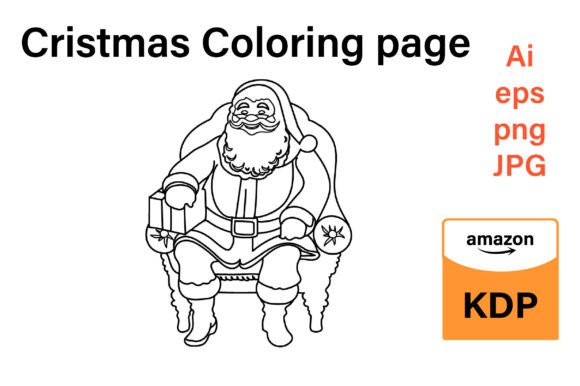
- Simple coloring page (ages 2 to 4): big shapes, thick outlines, one Christmas image per page
- Ornament tracing sheet (ages 3 to 5): trace a dotted outline of a bell or a star
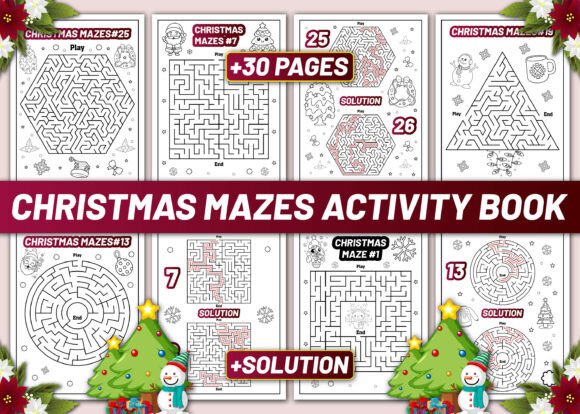
- One-path maze (ages 3 to 5): Santa to the chimney, no dead ends
- Connect-the-dots shape match (ages 2 to 4): draw a line from a shape to its matching outline
Don’t expect a second round from these without a break. Your child finishes a simple maze and looks up for the next thing within a few minutes. That’s the design working, not the activity failing.
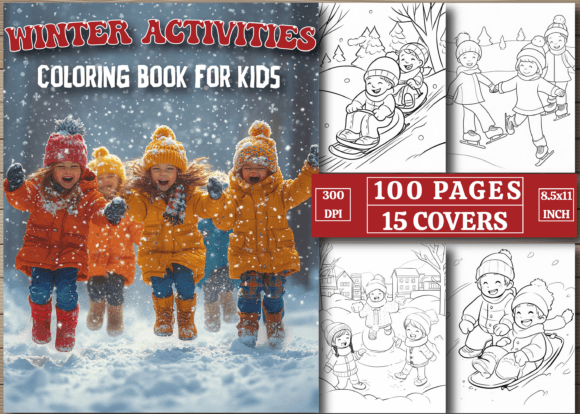
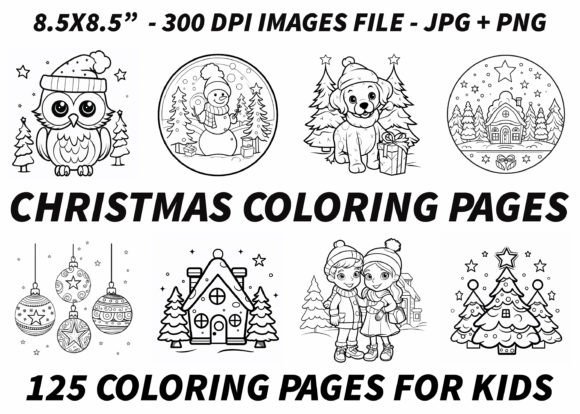
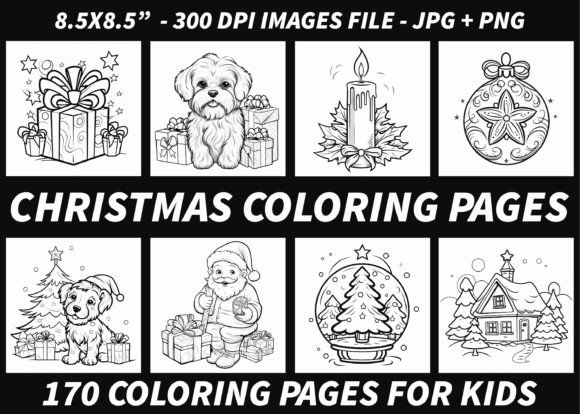
No scissors or glue needed here, which is also why this band travels well: car rides, waiting rooms, the five minutes before a meal is served. A big coloring-pages collection means you’re never reaching for the same sheet twice in one week.
5 to 10 Minutes: Quick Wins for Classroom Transitions
- Paper chain garland (ages 4 to 6): cut strips, loop, and glue; good for quick wins between lessons
- Dot-to-dot, numbers 1 to 20 (ages 4 to 6)
- Spot-the-difference, holiday scene (ages 5 to 8)
- Pattern completion: finish the row of ornaments (ages 4 to 6)
- Simple maze with one dead end (ages 5 to 7): a small step up from the under-5-minute version
These need one skill repeated in a loop: trace, count, compare. That’s why they stretch past the 5-minute mark without losing your child’s interest.
Scissors aren’t required for most of this band, so it also works if your child hasn’t been cleared for cutting yet. A Christmas activity book mixes tracing, mazes, and dot-to-dot across dozens of pages, so you always have a fresh one on hand.
10 to 15 Minutes: The Sweet Spot for Most Preschoolers
- Christmas word search, short list (ages 6 to 9)
- Cut-and-paste ornament craft (ages 4 to 7, supervised with scissors)
- Color-by-number, simple key (ages 5 to 8)
- Christmas bingo, one round (ages 4 to 8, works for a classroom too)
- Simple paper ornament, one fold (ages 5 to 7, light scissors use)
This band is the sweet spot for a solo activity while you’re nearby but busy: wrapping gifts, finishing dinner, running a small reading group in a classroom.
It’s also the easiest band to extend. Add a second round of bingo, or a second word search page, and a 10-minute activity becomes a 20-minute one without changing the activity itself. A Christmas games bundle already has enough rounds built in that you rarely need to improvise a second one.
15 to 20 Minutes: Activities That Need a Little Patience
- Gingerbread house coloring book (ages 5 to 9): several connected pages around one theme
- Layered paper ornament (ages 6 to 9): cut, fold, and assemble into a 3D shape
- Story sequencing (ages 5 to 8): cut panels, put a short holiday story in order, then color it
- Christmas crossword, picture clues (ages 6 to 8)
Activities in this band usually change task partway through: cutting, then folding, then coloring, instead of asking for one skill the whole time. That task change is what buys the extra minutes.
If your child finishes early, check whether the fold or cut actually happened, or got skipped to reach the coloring part. A ready-made printable bundle usually has a few sheets at this exact length already built in.
20 Minutes to an Hour: Projects Worth Clearing the Table For
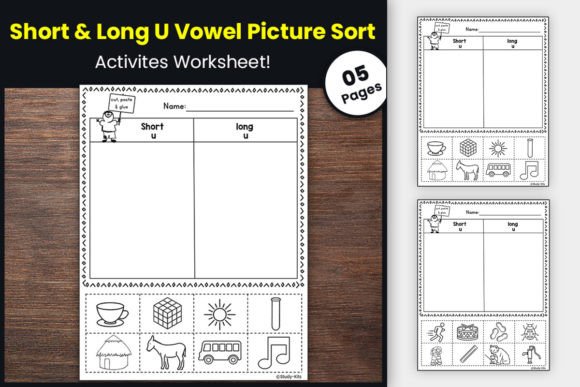
- Multi-step craft kit (ages 6 to 10): several pieces, often with glue drying time built in
- Baking with supervision (ages 5 to 10): mixing, shaping, and decorating holiday cookies
- Build-your-own board game (ages 7 to 10): draw a path, write rules, then play it with a sibling
- Advent-style countdown craft (ages 6 to 10): several small pieces assembled into one larger display
These are worth clearing the table for because they don’t survive being rushed. A glue-drying step or a baking step forces a natural pause, a good moment to switch to a shorter activity and come back later.
Start anything in this band earlier in the day rather than right before dinner. A rushed ending tends to undo whatever made the activity worth your time. A multi-round games bundle works well here too, since several kids can share it across the whole hour.
Over an Hour: A Full Afternoon or a Classroom Party
- Rotating craft stations: three or four short activities set up around a room, kids move between them
- Full classroom party block: games, one craft, and a snack for a full class, useful when the schedule allows a whole period
- Cookie decorating station with multiple kids: the line and the waiting become part of the activity
Anything over an hour almost always works because it’s several shorter activities chained together, not one single task stretched thin. Treat it as a schedule of the bands above, not one long activity.
Running a full room? Our classroom Christmas games for 25 kids lays out a tested rotation you can borrow directly.
A classroom version also benefits from a visible timer or a simple bell. Kids rotating through stations tend to linger at whichever one they like best unless there’s a clear signal to move. The signal matters more than the exact time at each station.
Plan transitions as their own small activity, not dead time between the real ones. Your room needs somewhere to put down scissors and wash sticky hands between stations, plus someone calling the rotation so nobody lingers out of habit.
Build two or three minutes of transition time into the schedule for every station, and the “over an hour” total stops feeling like it slipped away from you. A bundle with enough variety for every station saves you from printing five different downloads to fill one party.
Why Some Activities Look Fun in Photos and Fail in Real Life
A finished Christmas craft photographs well because it’s finished: glue dry, pieces in place, nothing out of frame. What that single photo skips is every step that got there. That’s exactly the part that tells you how long the activity actually takes.
A tutorial built around real process photography, rather than one glossy result shot, tends to show something closer to five process images for every three detail images and two of the finished result.
That’s because the process is where the time goes: cutting, holding pieces together while glue sets, redoing a fold that went wrong.
A single result photo hides all of that. An activity can look like a 10-minute craft in a picture and run closer to an hour once you’ve got scissors and glue involved.
If a Christmas activity is only shown as one finished photo, assume the time estimate is wrong in one direction: usually too short.
The fix isn’t to distrust every photo. Treat the picture as proof the activity is possible, and treat the duration band here as your actual planning number.
There’s a second thing a single result photo can’t show you: how many attempts it took to get there.
A craft that took one try for an adult demonstrating it for a photo can take your child three or four tries, each one adding minutes that never show up in a before-and-after shot.
That’s part of why the bands above lean toward the longer end of a range rather than the shorter one. They’re built around what a first-time child actually does, not what a practiced adult can do once.
Watch for one tell when you’re judging a photo-only activity: a finished craft with every piece perfectly aligned usually means either an adult finished it, or the photo is the best attempt out of several. Neither is dishonest, but neither tells you what your child’s first try looks like.
A listing that shows a slightly uneven result, with a visible seam or an off-center piece, is usually a more accurate preview of what to expect. A Christmas activity book with dozens of pages at least gives your child enough tries to get past the first attempt.
Matching the Activity to the Age, Not Just the Clock
The age ranges next to each activity above are a starting point, not a rule. A child who already reads will blow through a word search in under a minute, regardless of the age label on the sheet, so bump them up a band.
A child who gets frustrated easily does better one band down, with an easy win first.
If a printed activity gets abandoned in under a minute twice in a row, the fix is usually the band, not your child. Move down, not harder. A shorter, easier activity that gets finished beats a longer one your child walks away from.
The reverse also holds. A child who blows through the 10-to-15-minute band without slowing down is ready for the 15-to-20-minute band next time, even if the age label says they’re a year early.
Siblings close in age often sit in different bands for the same activity, and that’s normal, not a sign either kid is behind or ahead. Hand a 4-year-old and a 6-year-old the same word search and you’re really watching two different activities: one is tracing letters they half-recognize, the other is solving it.
Expect the bands to split by a year or two whenever two kids share an activity. Have a follow-up ready for your older one before the younger one is close to done.
A practical workaround for mixed-age groups: pick one activity that naturally forks by skill, rather than one that’s identical for everyone.
A word search printed at two reading levels, or a coloring page with both a simple outline and a detailed one, lets two kids sit at the same table doing visibly the same thing without one finishing in a tenth of the time.
It’s a small planning step, but it avoids the moment where your younger child notices the older one is done and the activity ends early for both. A coloring-pages collection with a mix of simple and detailed sheets covers this without you sorting anything by hand.
What to Keep on Hand So You Are Never Caught Without a Backup
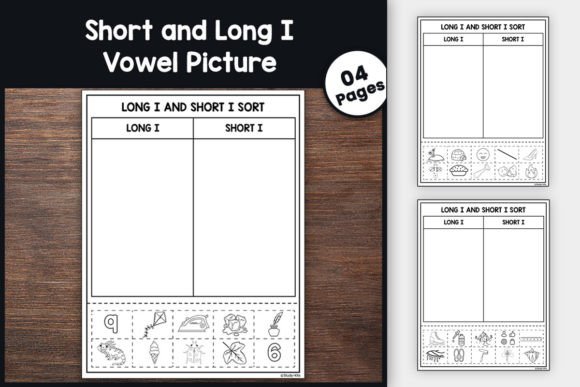
The afternoons that fall apart are rarely the ones with too few activities. They’re the ones where every activity on hand is from the same band. If your only options are all 20-minute crafts, you have nothing to reach for during the 5-minute gap before dinner.
- At least one activity from the under-5-minute band, printed and ready, for transitions
- One from the 10-to-15-minute band for the most common window: right after a meal, before a nap, during a sibling’s activity
- One longer project from the 20-minutes-to-an-hour band saved for when there’s genuinely open time
Keep one of each band ready, rather than five variations on one band. That’s what actually stops the mid-afternoon scramble to find something new to print.
Print more than one copy of your under-5-minute activities specifically. Those are the ones most likely to get used more than once in a single afternoon: as a true warm-up, or as the thing your child reaches for the moment a longer activity wraps up early.
The longer bands rarely need a spare copy, since one attempt at a multi-step craft tends to be enough for one day.
Sort printed sheets into labeled envelopes by band rather than by theme. Reaching for “the under-5-minute envelope” during a car line pickup is faster than flipping through a mixed stack looking for something short.
A printable bundle sorted into bands from the start gives you that folder on day one instead of building it sheet by sheet.
Printable Christmas Activities Worth Keeping in the Folder
You can print one sheet at a time as a gap opens up. Or you can start with a bundle that already spans several bands and skip the scramble entirely.
Each set below slots into a specific band, rather than sitting as a generic “Christmas activity” with no sense of how long it runs.
Unlimited creative assets. Access to AI tools.
Commercial licence included.
Get downloadsReady-to-print rounds for more than one child at a time, covering the 10-minute-and-up bands without you designing a single sheet.
Tracing, mazes, and word search mixed across several pages, so you’ve always got a fresh one left for the under-10-minute gaps.
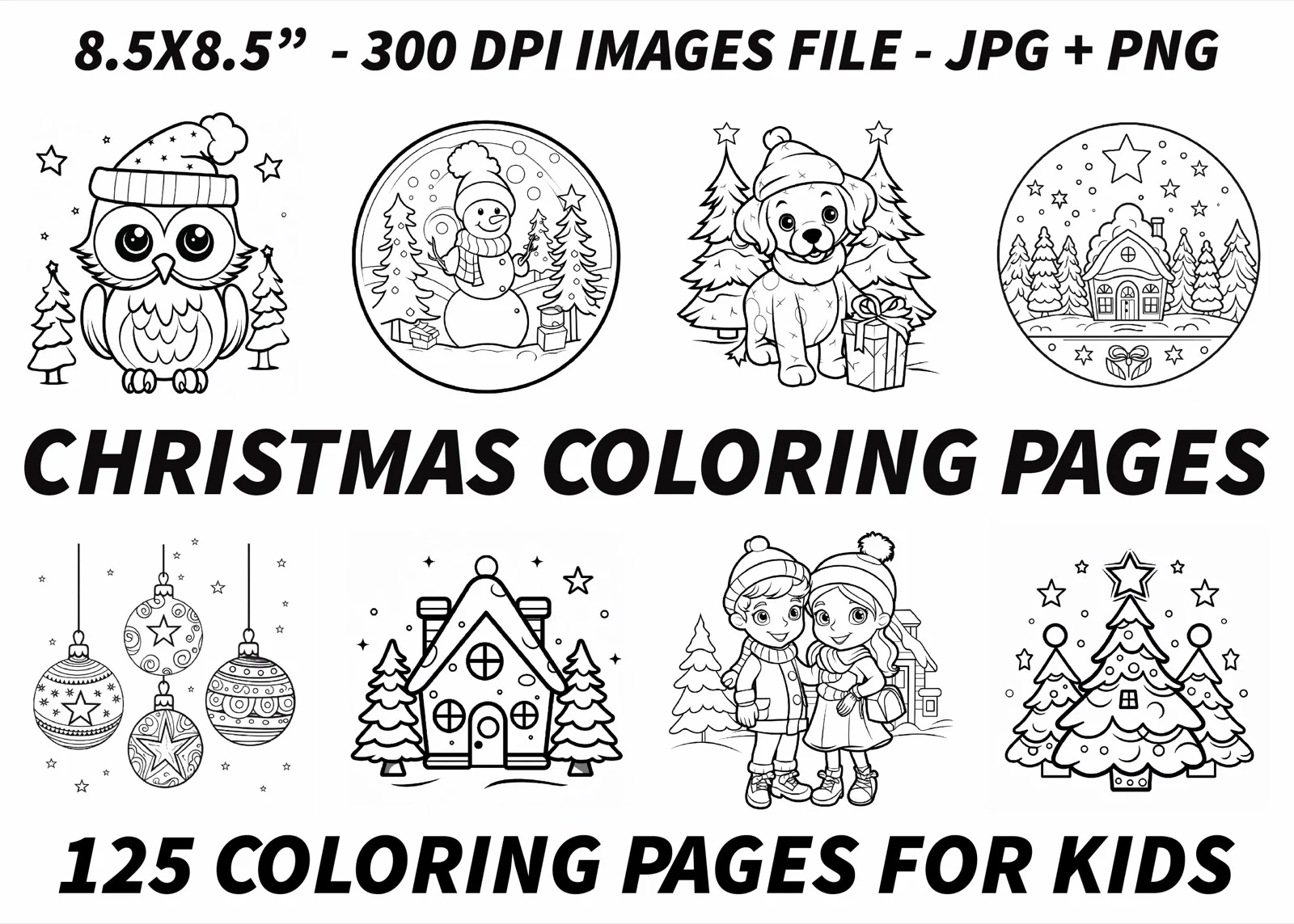
Enough pages that you’re never printing the same sheet twice in one season, the easiest fit for the shortest band.
Keep one bundle from each band in a folder, printed ahead of time, and “what do I hand them right now” turns into a 10-second decision instead of a search.
A folder also solves a problem a single printed sheet can’t: running out partway through December. That’s often the difference between a folder that lasts the whole season and one that’s empty by the second week.
Looking for a schedule rather than a sorted list? Our Christmas Eve evening plan in five blocks covers the night-of sequencing, and our printable activities sorted by attention span does the same duration-first sorting for the rest of the year. Our easy Christmas games for family is the place to look once you’ve got the living room involved too.
Browse Christmas activities for kids and Christmas games for kids for more of the season.
Frequently Asked Questions
What christmas activities for kids at home need the least setup?
Coloring pages and tracing sheets. Print and hand over, no cutting or gluing needed, which makes them the fastest to pull out in the under-5-minute band.
What are good christmas activities for preschoolers?
Big-shape coloring pages, one-path mazes, and simple tracing sheets. Anything that uses one skill at a time without reading, since most preschoolers are still building both. These same sheets also work as christmas activities for kids at home on a day off, not only inside a classroom.
How many printed activities should you have ready for a school break afternoon?
One from each band rather than several from one band: a short warm-up, a mid-length solo activity, and one longer project saved for genuinely open time.
Why did a 20-minute activity get abandoned in 5 minutes?
Usually a skill mismatch, not a bad activity. The task was too easy for your child’s current level, so it finished faster than the label suggested. Move up a band next time.
Are christmas activities for the classroom different from home ones?
The activities themselves are often the same. The main difference: a classroom can turn a single 10-minute activity into an hour by rotating several small groups through stations, instead of handing everyone the same sheet at once.
A teacher running a room of 25 kids gets more mileage out of one activity than you do at home with one or two kids, simply because the rotation itself eats time.
Do any of these activities need color ink?
Only color-by-number sheets, and only for a small key. Everything else prints fully in black and white, and a big coloring-pages collection is the easiest way to keep black-and-white options on hand without hunting for a new sheet.
What should you do if an activity runs much shorter than its band suggests?
Treat it as information, not failure. Your child is ready for the next band up, so reach for something from that band next time the same window of time comes around.
Can one activity work for both a toddler and a school-age sibling at the same time?
Rarely as written. It’s usually faster to hand each child something from their own band than to adapt one activity for both, since the adaptation itself can take longer than just picking two separate sheets.
What are the best Christmas activities and crafts for kids who get bored fast?
Anything that changes task partway through (cut, then fold, then color) rather than asking for one skill for the full stretch. Those hold attention the longest in my own classroom testing, and a mixed activity book is the fastest way to get a few of them on hand at once.
What are the best indoor Christmas activities for kids on a rainy afternoon?
Anything from the 15-minutes-to-an-hour range. A rainy afternoon usually has the open time to let a multi-step craft run its full length without being rushed before dinner.
What are some Christmas activities for kids near me or at home, without a lot of planning?
A warm-up from the under-5-minute band, printed ahead, covers both. It travels well for car lines and errands, and it works just as easily at your kitchen table at home.
What are the best Christmas events and activities for kids this year?
For a classroom or a family gathering, a full rotating-stations block beats a single activity. It keeps a group moving instead of having everyone wait on one craft.
How far ahead should Christmas activities be printed?
A week is enough for most households. Close enough that the stack doesn’t go stale, far enough ahead that a busy evening doesn’t mean printing at the last minute. Printing straight from a ready-made bundle cuts that prep time down to a single session.
Key Takeaways
- Sort quick Christmas activities for kids by how long they hold attention, not just by theme. The two don’t always match.
- Under-5-minute activities are warm-ups; the 10-to-15-minute band is the sweet spot for most solo play.
- Activities that change task partway through (cut, then fold, then color) hold attention longer than single-skill sheets.
- An activity abandoned in under a minute usually means the wrong band, not the wrong child.
- Keep one printed activity ready from each band, not several from the same one, to avoid the mid-afternoon scramble.
I keep one of each band printed in my own folder all December. A ready-made printable bundle is the fastest way for you to get there without designing a single sheet yourself.
About the author: Hi, I’m Tess. I taught preschool for nine years and now make the printables I used to photocopy at 7am. Every game here has been played with a real group of kids before it goes up, and I tell you how long it actually held their attention, not how long it should have.